IAORO
A platform that enables young adults to critically engage with AI afterlife ethics
My Role
Designer and Reseracher
End-to-End UX/UI Designer
Team
Solo Master's Thesis Project
HCD Research Group, UTwente
Timeline
Sep 2024 - May 2025
Tools Used
Figma, Miro, Procreate
Adobe Suite, Framer
Sector
AI, Speculative Design
Ethics & Policy
Summary
This project is about designing a speculative web platform to critically engage and spark debate among young adults about the AI-powered digital systems that aim to create an accurate version of a deceased person.
I started with an open research question, ran user research through diary studies and co-creation workshops, and found that young adults need an accessible space to think through the ethics of this technology. This led to the design of IAORO platform.
AI Afterlife
Technology is now allowing mourners to "reconnect" with AI-powered versions of their deceased loved ones !
AI Afterlives are generative AI systems that create interactive digital replicas of deceased individuals by analyzing their digital footprints (such as social media posts, messages, photos, and voice recordings). These AI-powered simulations enable the bereaved to engage in conversations and experiences that feel like reconnecting with their loved ones, though the interaction is with a recreation instead of the real person themselves.

A selection of news headlines from 2023–2025 covering the rise of AI afterlife technology
Problem Statement
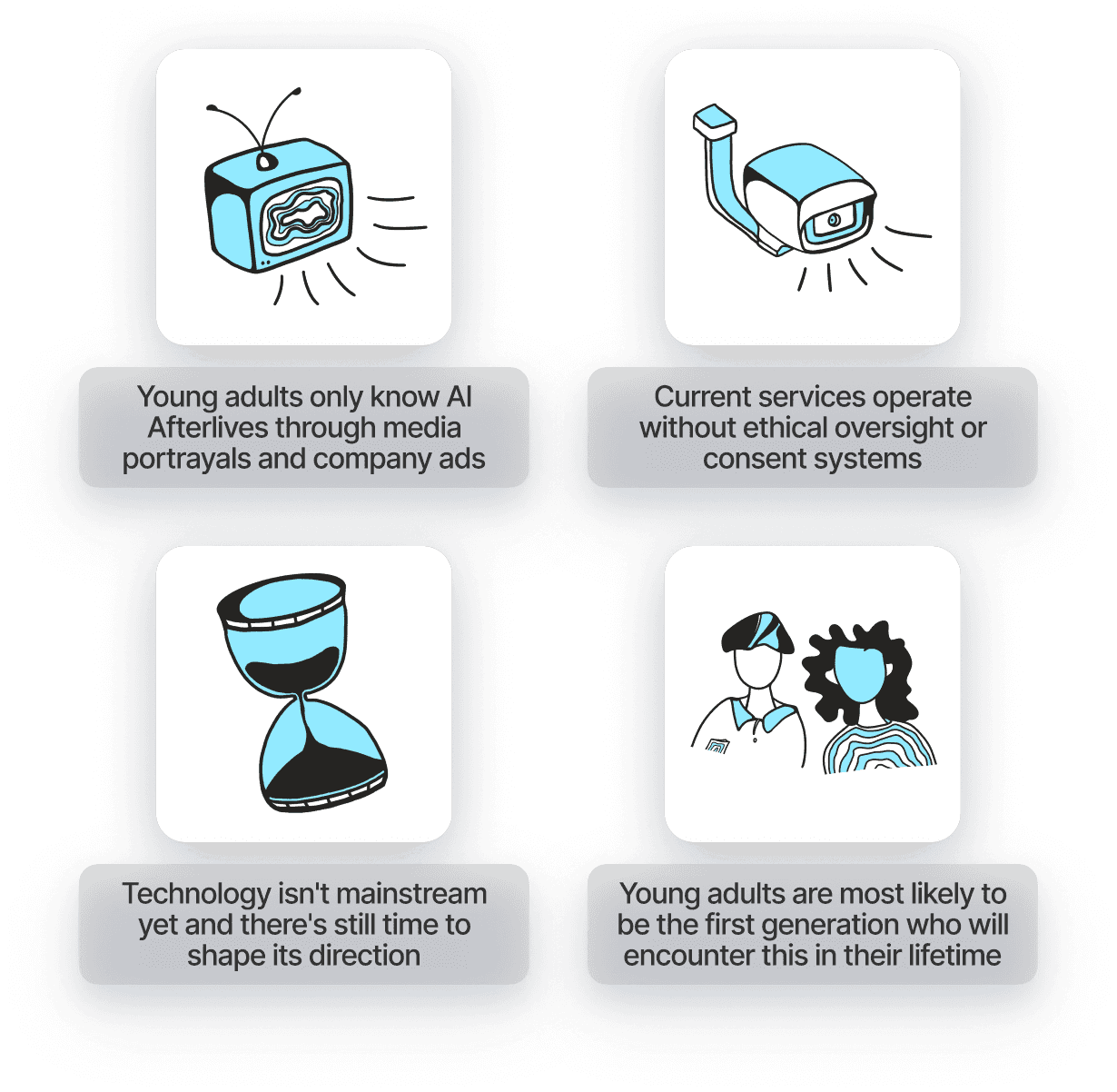
AI Afterlives are emerging fast, and young adults are unprepared for what living with this technology really means
Most people only know AI Afterlives through company ads or sci-fi stories. It creates extreme reactions without room for real reflection. Young adults will be the first generation to encounter this technology, but the space to think through its implications barely exists. AI Afterlife isn't mainstream yet, meaning there's still a chance to shape how it develops.
How Might We
How might we spark debate and help young adults critically engage with AI Afterlife ethics before this technology becomes mainstream?
Desk Research
Academic research points to both benefits and risks, while media shapes public perception through dystopian and utopian narratives
Research shows that AI Afterlives tap into the human desire for continuing bonds with the deceased, offering emotional support and legacy preservation. However, scholars warn of risks. Most people currently understand AI Afterlives through two main sources: corporate marketing and polarized media portrayals. These narratives shape expectations before people encounter the real technology.


Current Market Landscape Analysis in the AI Afterlife Industry
AI Afterlife services already exist, operating without ethical oversight or standardized frameworks
Looking at what’s already out there, multiple companies have launched AI Afterlife platforms, each taking different approaches to digital resurrection.

User Research: Diary Study & Design Probes Kit
A Custom made kit was given to 5 young adults to explore their emotional responses to AI Afterlife technology
Diary study with design probes aka cultural probes is a research method where participants use specially designed materials to explore and document personal experiences over time. Participants in this study received a custom made kit and spent 6 days reconnecting with their deceased person through both a physical picture frame and an AI chatbot (a close approximation of current tech), reflecting daily on their emotions and perceptions.

User Research: Co-Creation Workshop
I facilitated a workshop where 5 participants collaboratively imagined futures where AI Afterlife services are mainstream
After experiencing AI Afterlife technology firsthand, participants were better equipped to imagine its future implications. I designed a collaborative speculation workshop inspired by "The Thing From The Future" game, creating custom materials that break down future scenarios into combinable elements.

Key Findings from the User Research
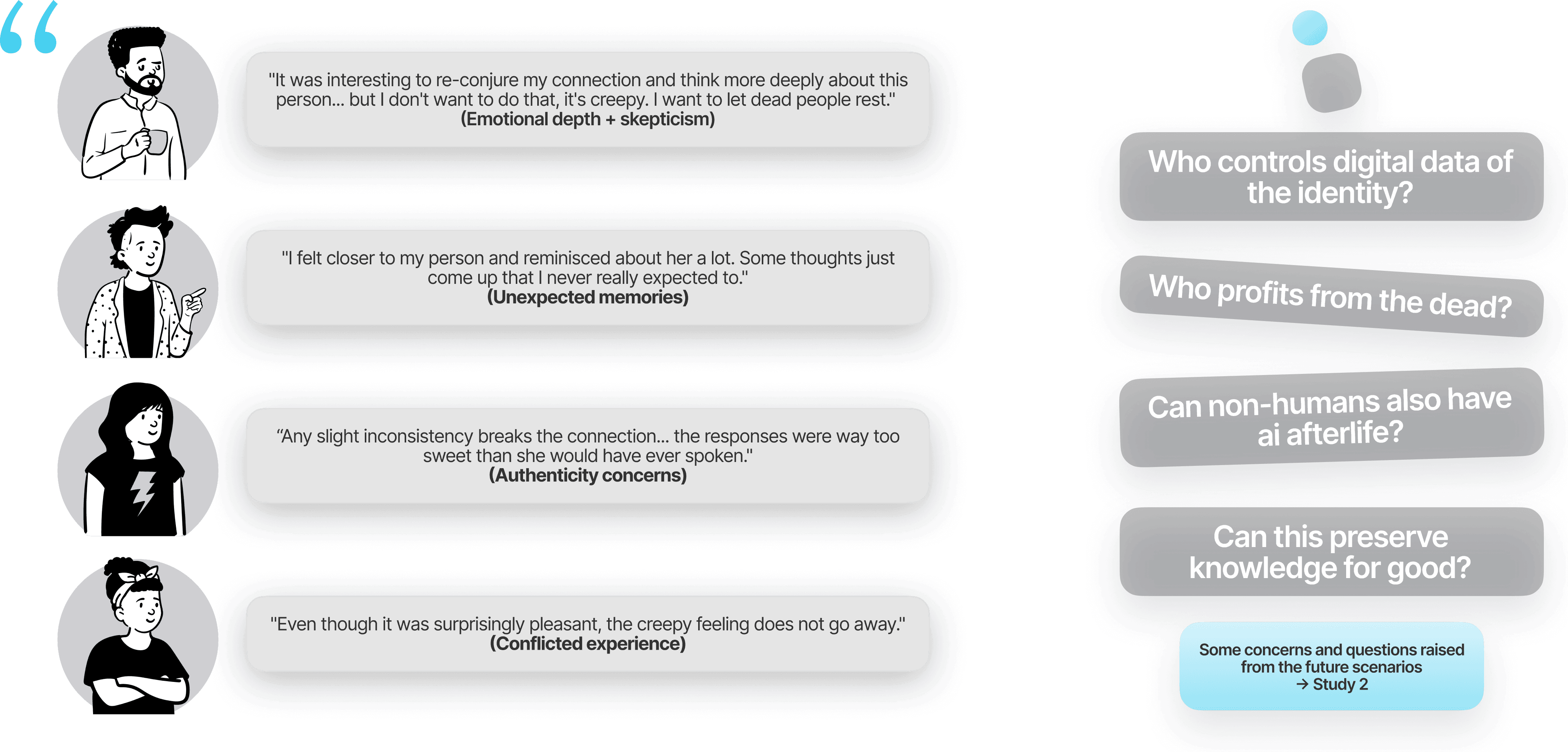
Simple "good or bad" assumptions were replaced with nuanced, contradictory feelings once participants experienced AI Afterlives firsthand and speculation revealed societal concerns
The experience moved them beyond media-driven reactions, revealing that AI Afterlives provoke questions about authenticity, consent, grief, and memory in ways people can't predict until they actually try it.
When collaborated to imagine futures, their scenarios clustered around concerns about power, exploitation, and control.
From Insights to Design Direction
What if there was an independent platform that certified AI Afterlife services and protected individual consent?
Both studies pointed to the same core concerns: consent, authenticity, and safety.
This led to IAORO which is a speculative oversight platform where users can register their consent preferences, check ethically certified providers, and explore news about AI afterlife implications. By presenting all of this as if it already exists, the platform aims at making the visitors to think and engage with the concept of AI Afterlife even more.

Information Architecture and User Flows
Card sorting shaped the platform structure around 3 core features
I conducted card sorting sessions with participants to define the platform's information architecture. The results revealed how users naturally group content around three core features: consent registry, news, and service provider information. This informed a structure that supports both linear task flows (e.g. registering a preference) and exploratory browsing.