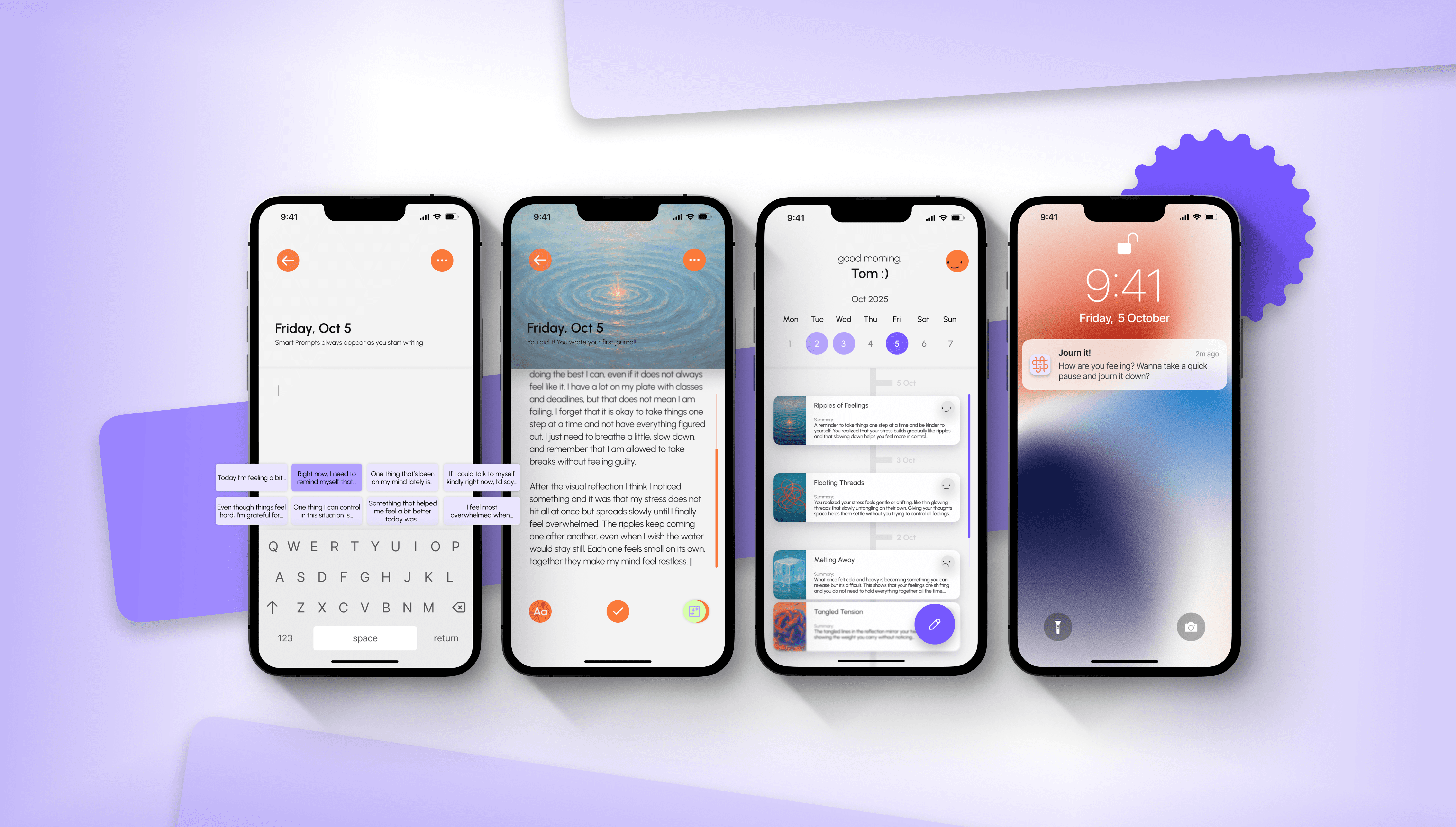
Journ it
Helping students manage stress through expressive journaling and visualization
My Role
End-to-End UI/UX Designer
Team
3 Design Reserachers
Timeline
8 Weeks
Tools Used
Figma, Miro
Procreate, DALL-E
Adobe Suite
Sector
B2C, HealthTech
AI-enabled Wellness
TL;DR
Problem
University students often face high stress that limits their well-being & success
In the Netherlands,
67% of students reported higher-than-normal stress during their studies and over 40% show signs of possible burnout🔥 *
62% of international students feel stressed often or always *
Stress not only undermines students’ mental health but also holds them back from reaching their academic/personal goals.
*According to Reports by Nuffic (2022) & EUR Student Wellbeing (2021)

TL;DR
Solution
An expressive journaling approach designed for students can be helpful

1
Journal and Write Expressively
Guided by evidence: expressive writing improves health and well-being *
Helps students process emotions and reduce stress *
Encourages reflection and meaning-making through writing
*according to Pennebaker & Smyth (2016) and research from the Journal of Behavioral Medicine

2
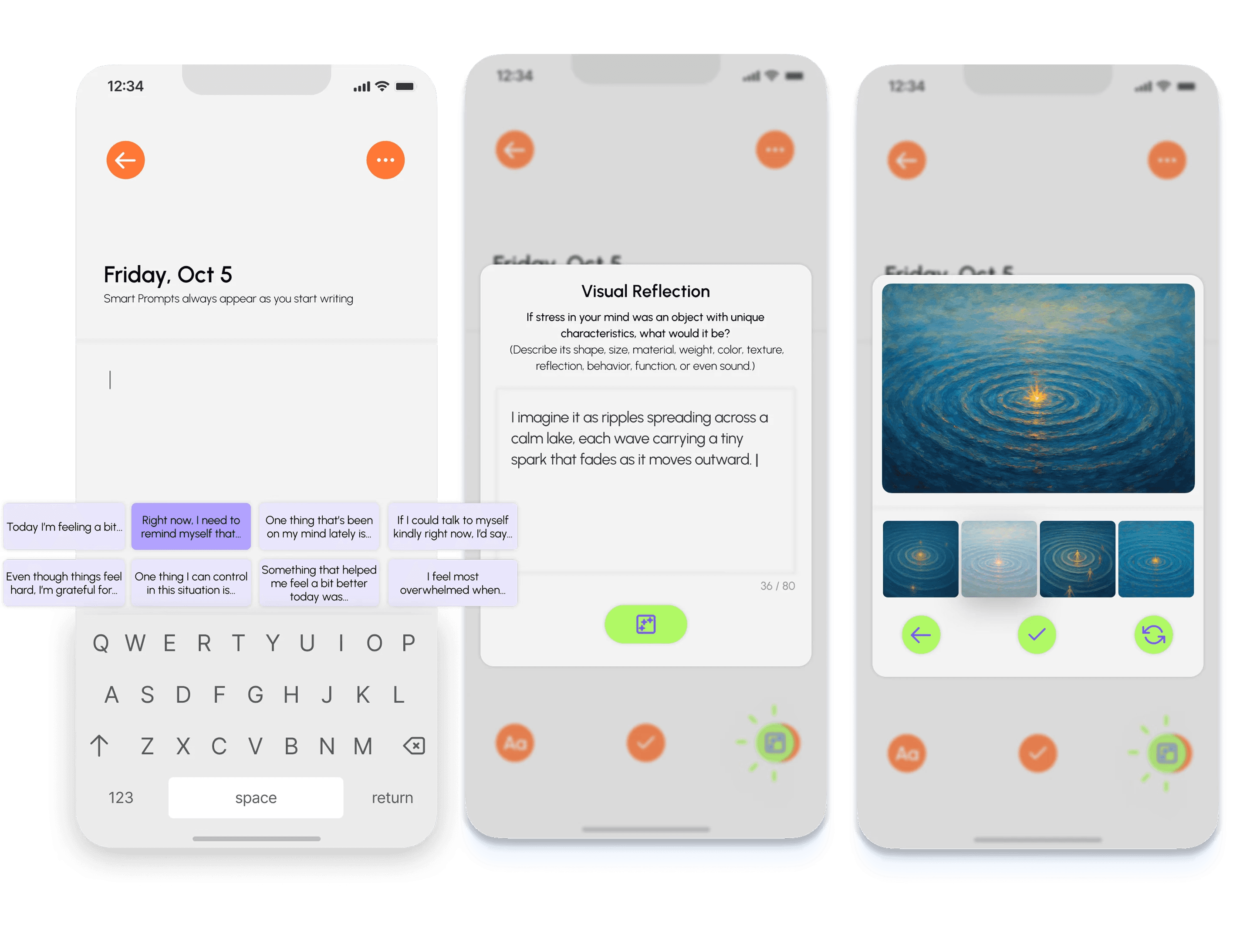
Guided Prompts and Visual Reflections Feature
Personalized prompts make it easier to start writing
AI-generated visuals help understanding emotions from a new perspective and view
Feelings and emotions can be visualized and annotated with written words


3
Flexible and Habit Forming Experience
Students can write at their own pace
Lowers barriers to consistent journaling
Turns journaling into a habit

Why This Project ?
From "Personal Experience" as a student to a "Design Opportunity"
Between deadlines, personal pressures, and the quiet weight of student life, wellbeing was something everyone felt but few talked about openly. A whiteboard in our university library confirmed what I already sensed.


Whenever our library staff asked how students were actually doing, it filled up completely. That's where this project began.
Secondary Research
Stress is a major barrier to student well-being and success
Research shows that 67% of Dutch students report higher-than-normal stress during their studies, and over 40% show signs of burnout complaints (EUR Student Wellbeing, 2021). Among international students, stress is even higher, with 62% saying they often or always feel stressed (Nuffic, 2022).

“..two-thirds of students in the Netherlands report stress levels above normal, with one in three experiencing serious stress-related complaints”
Expressive writing has proven benefits for managing stress
Studies by Pennebaker & Smyth (2016) show that writing about emotions for 15–20 minutes over four consecutive days improves both psychological and physical health outcomes.
“..students who engaged in expressive writing reported better immune function, lower blood pressure, and fewer health center visits”

Competitive Analysis
No journaling apps focused on expressive writing for students
When analyzing the top 5 journaling apps with stress-relief features or similar ideas to this project, I noticed that none were designed specifically for students or focused on stress. Some use AI, like Rosebud, but the experience feels more like chatting with a bot than engaging in personal, reflective journaling. This gap became the opportunity for my solution.

User Interviews (Semi-Structured)
Expressing stress helped students release tension, but keeping it up felt like another task
I conducted 5 one-on-one interviews with students who regularly experience stress during their studies. My questions focused on three areas: how students understand their stress, whether expressing it brings relief, and what makes coping strategies hard to maintain.

Participatory Design Session
Turning stress into something visible helped students open up and think about solutions together
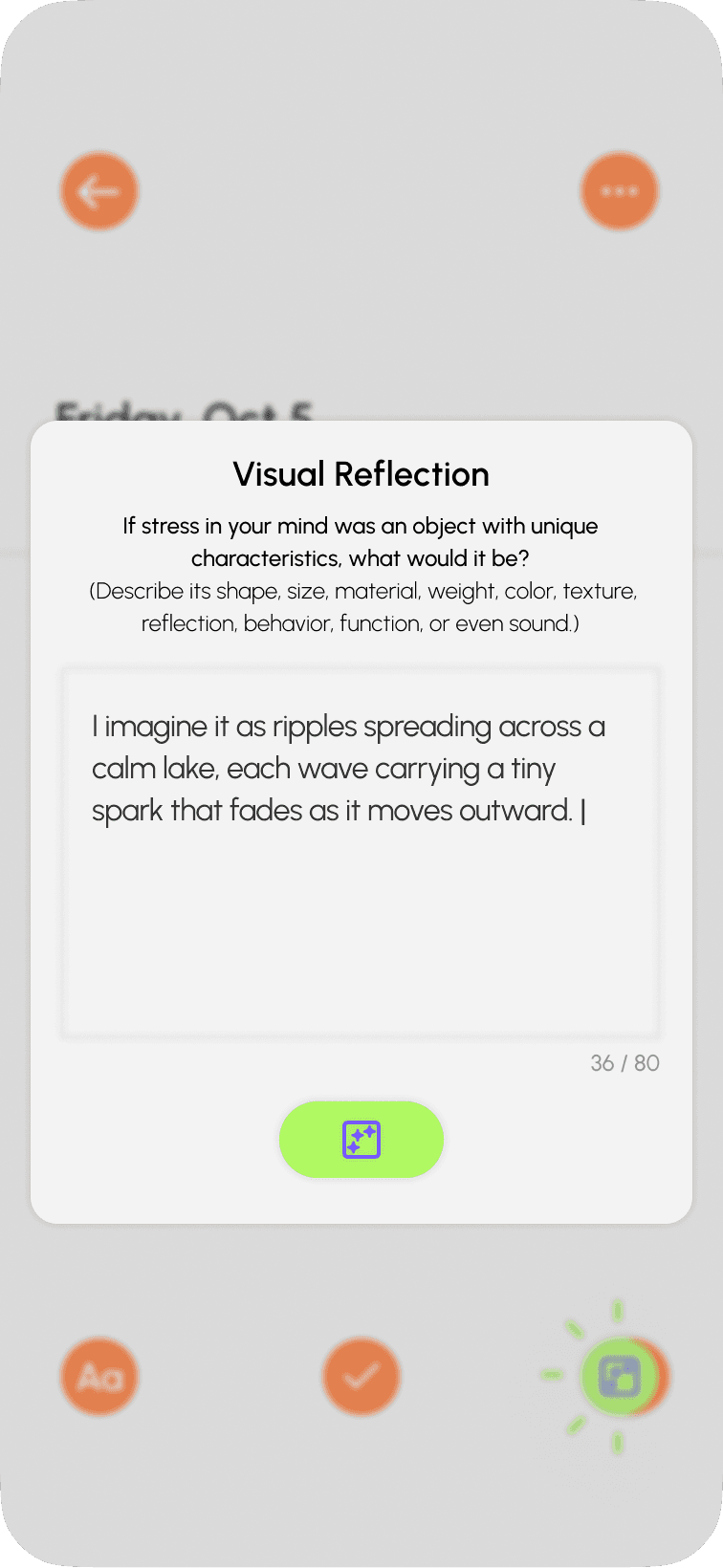
Me and my teammates organized a participatory design session with a group of five students. Students described and sketched what their stress would look like if it were an object, and we used DALL-E to generate images from their descriptions. These AI-generated visuals helped participants open up, compare experiences, and start thinking together about what a helpful tool could actually look like. The main question in this session was:
“If stress in your mind was an object with unique characteristics, what would it be?”
Describe its shape, size, material, weight, color, texture, reflection, behavior, function, or even sound. You can also sketch it to assist.

Participatory session in action + sketches, discussions, and AI-generated visuals. All shared with participant consent.
Main Insights
Interviewees/participants struggled to write expressively and most didn’t believe they can sustain it as a habit easily

Target Personas
Insights from the research, interviews and the participatory session helped me define the target audience and understand their story.

User Journey Map
Managing stress shouldn’t feel like extra work!
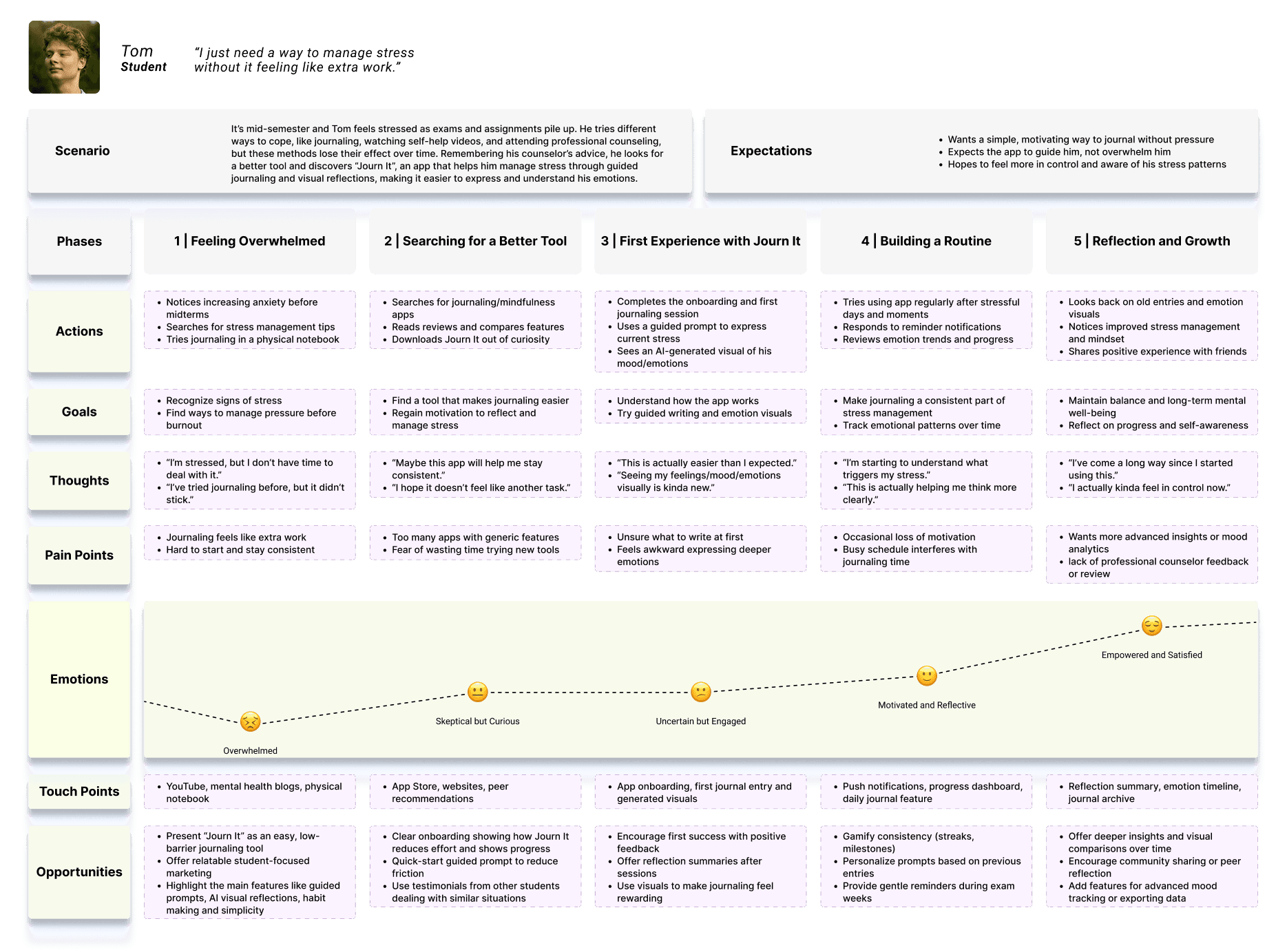
Based on the insights, I mapped out an ideal journey for a student discovering and adopting an expressive journaling tool. This future state journey imagines how guided prompts and visual reflections could turn stress management from an overwhelming chore into a sustainable, even rewarding habit.
User Flow
keeping the experience as simple and intuitive as possible
To define how the app should be structured, I ran card sorting exercises with student participants to understand how they naturally group and prioritize features. These sessions shaped the user flow below, focused on simplicity and clarity so students can start journaling, interact with guided prompts, visualize emotions, and track progress with minimal effort.

Wireframing Process
Building on the card sorting insights and user flow, I sketched wireframes on paper and developed early concepts to test and validate with our target users.

Testing & Improvements
Two key improvements that came directly from testing
1
Removal of Bottom Navigation
Letting the user naturally flow with a floating action button seemed to be a better fit
At first bottom navigation was considered due to the ease of adaptation for the users


2
More intuitive writing experience
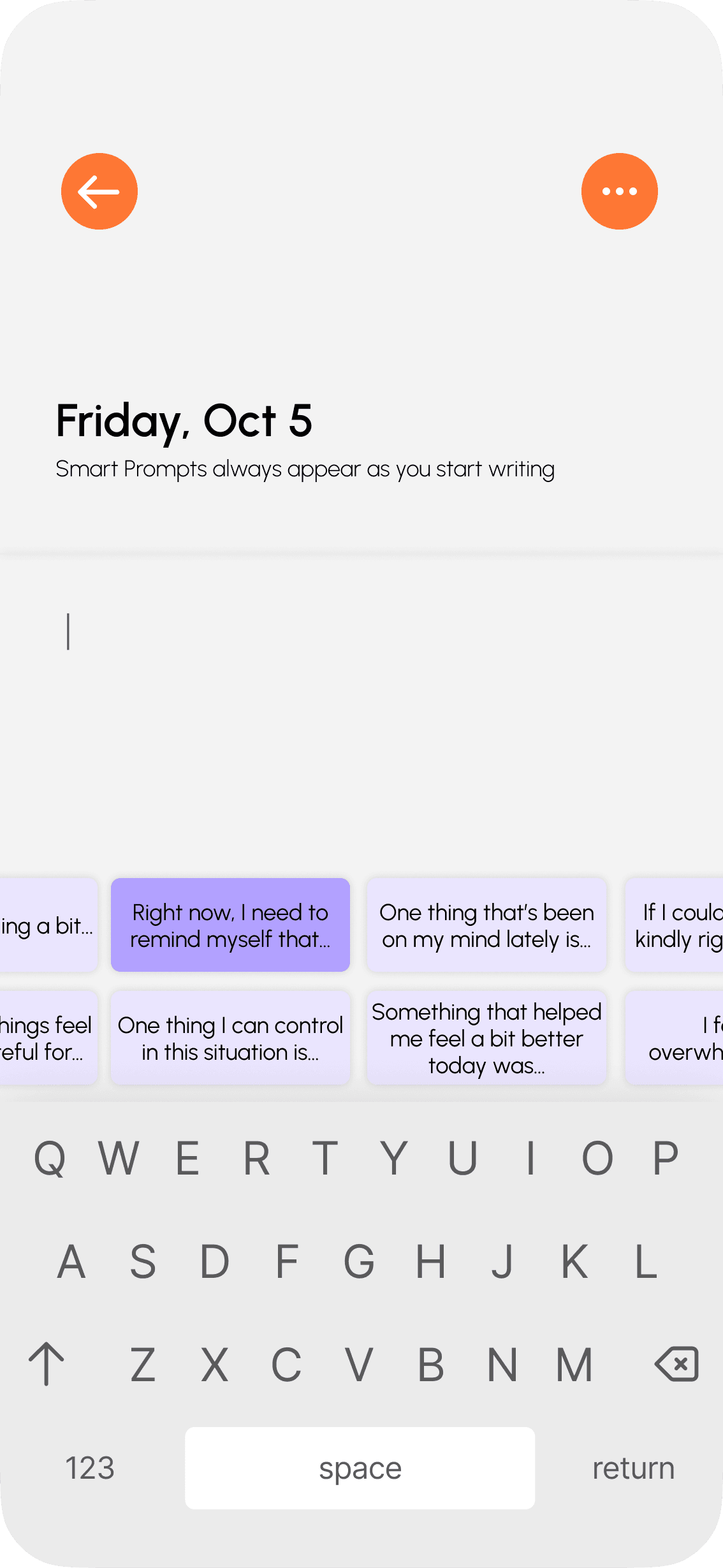
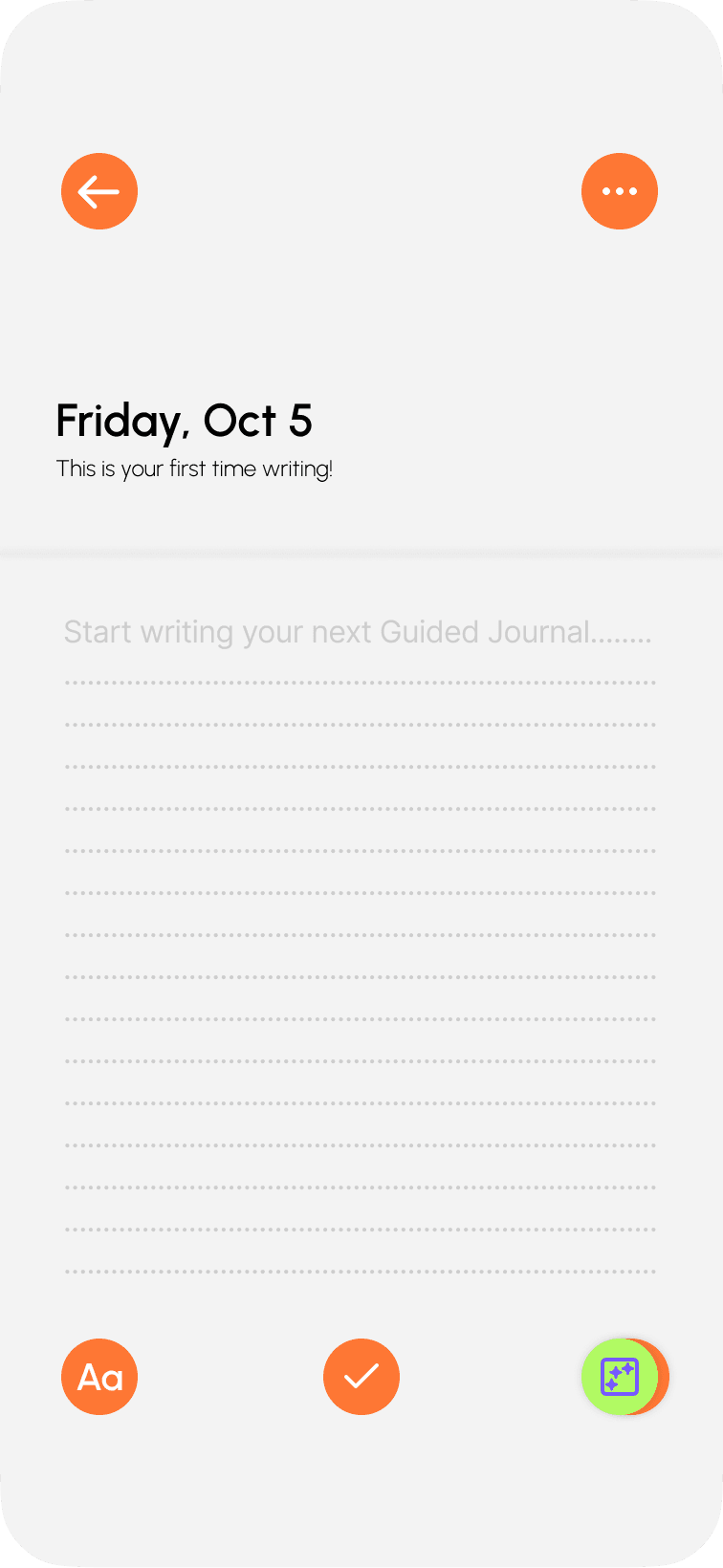
Key writing tools/features are now easier to reach and use while writing
Smart prompts appear while writing
Visual Reflection button now is accessible at the bottom of the screen
Design System

Final Look
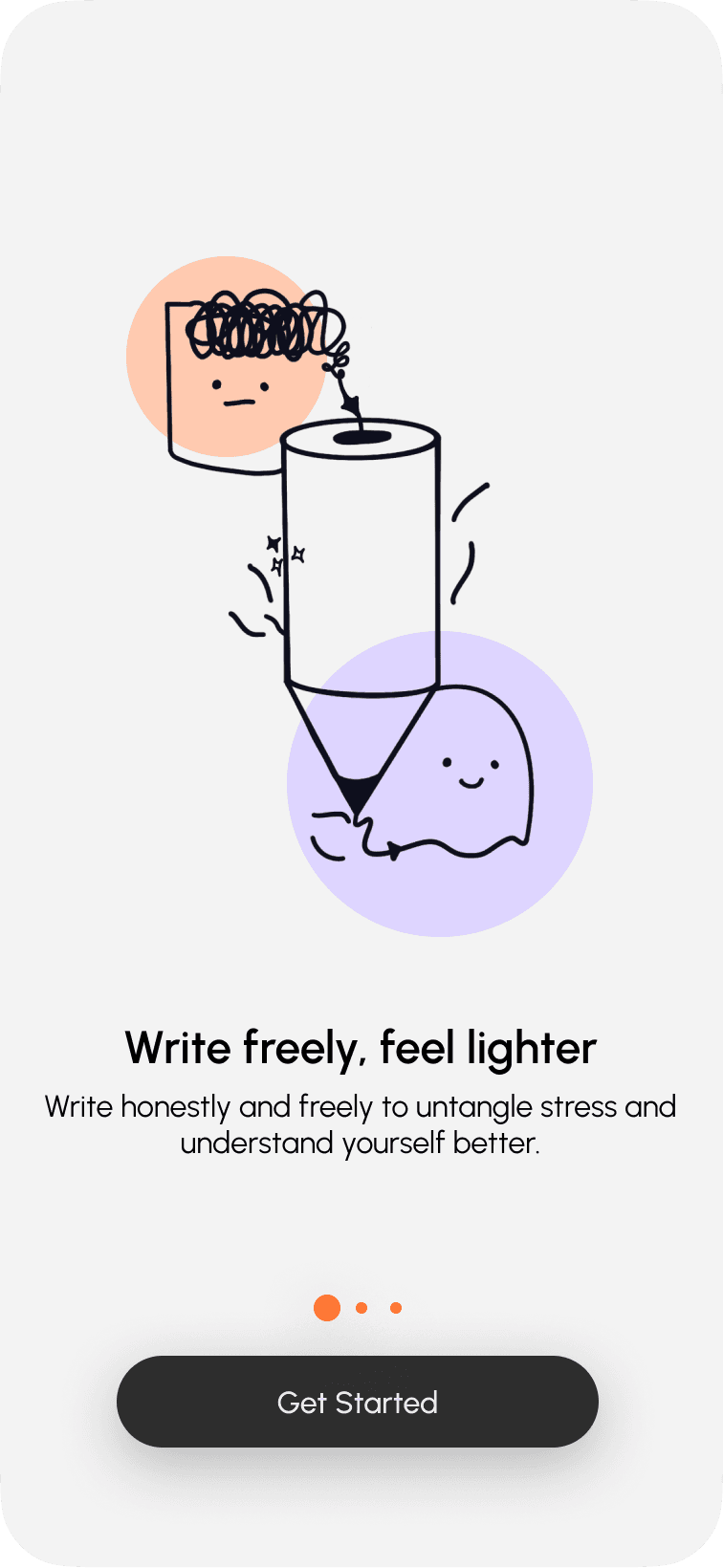
Onboarding
Drag the cards to explore all screens



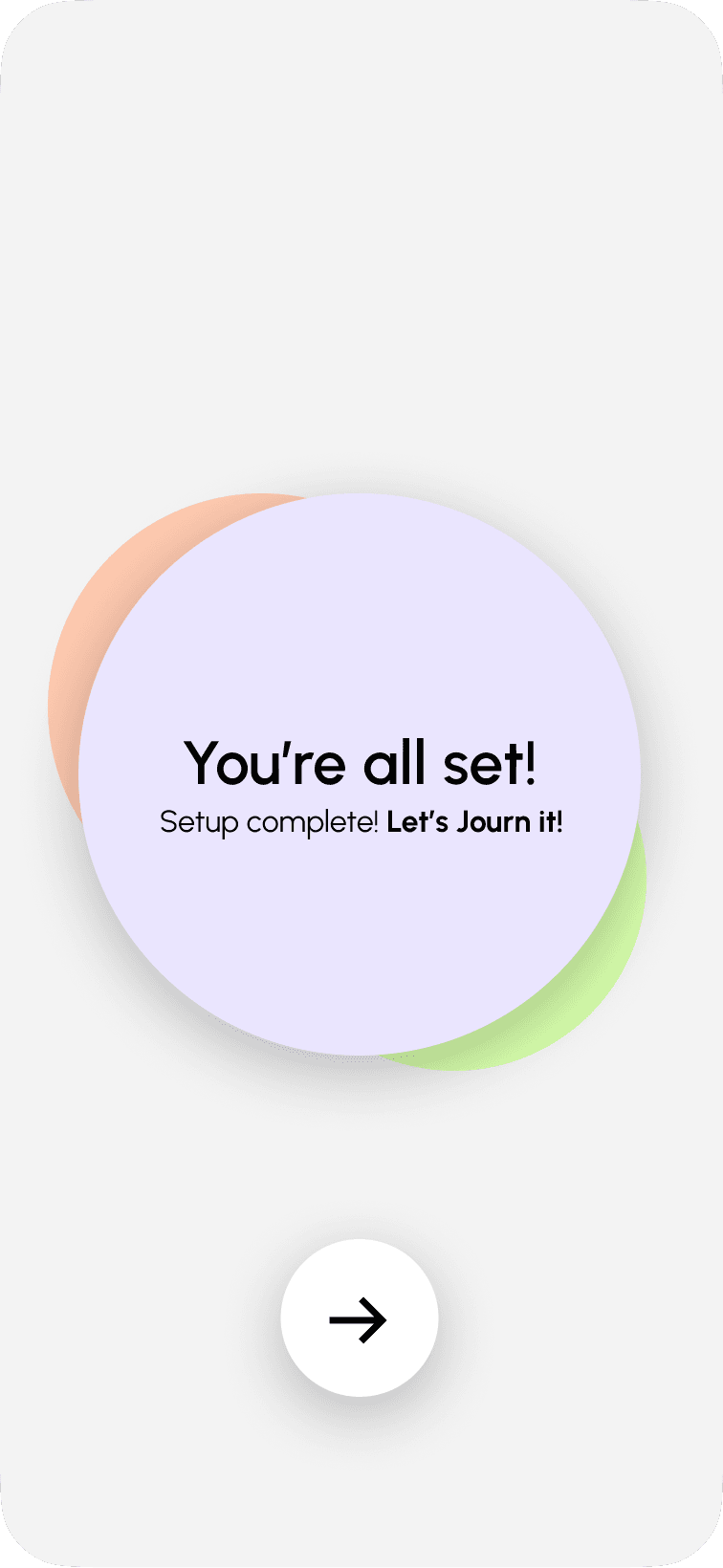


Account Setup
A New Entry





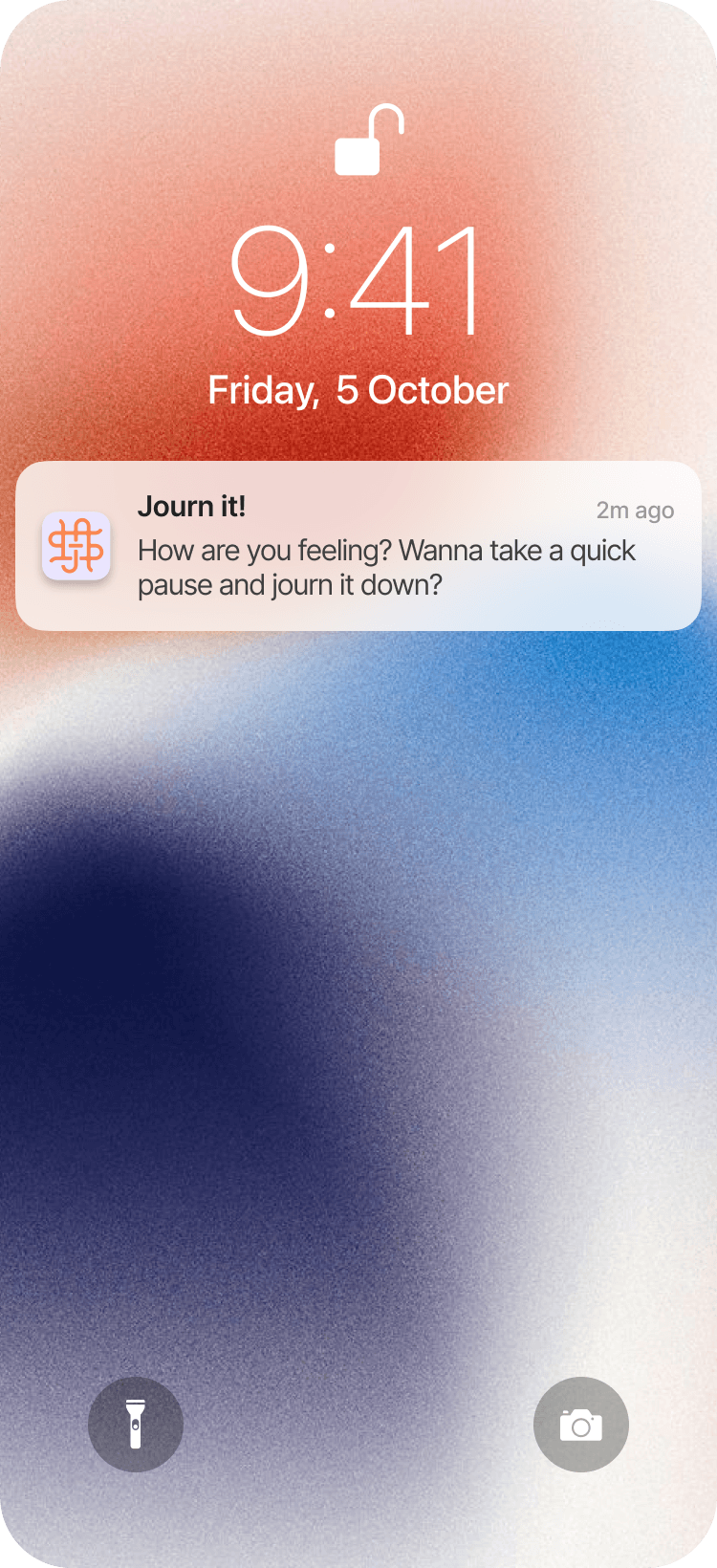
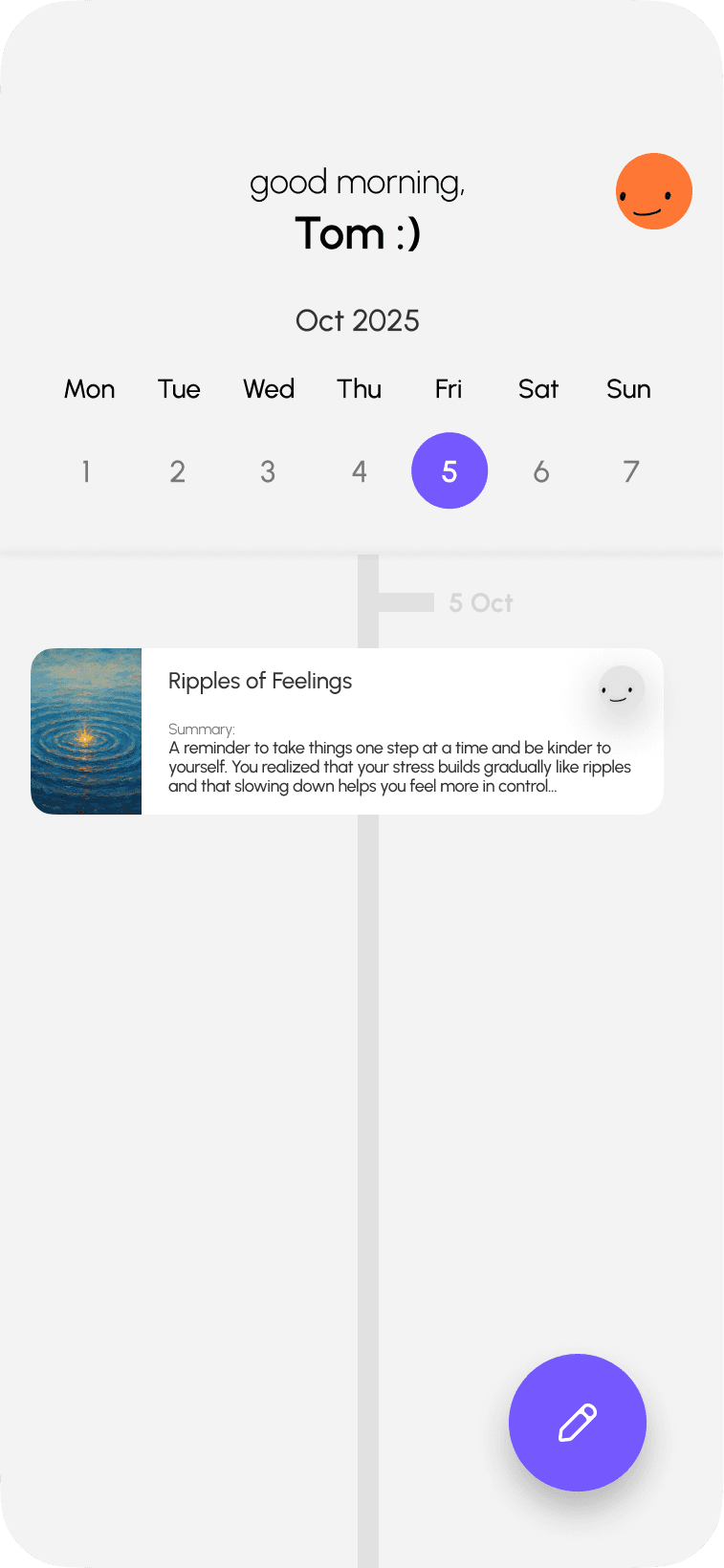

Journal Archive
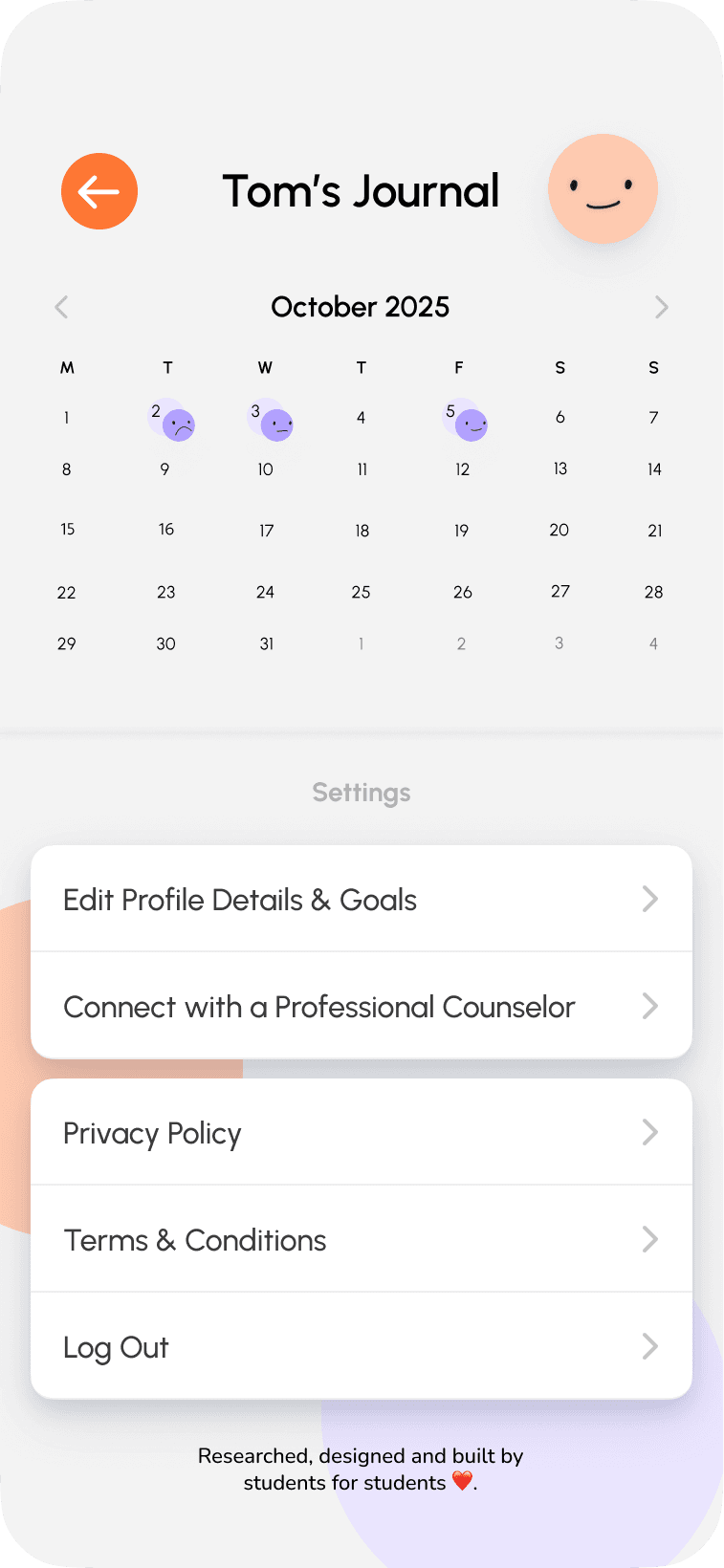
Mood Calendar,
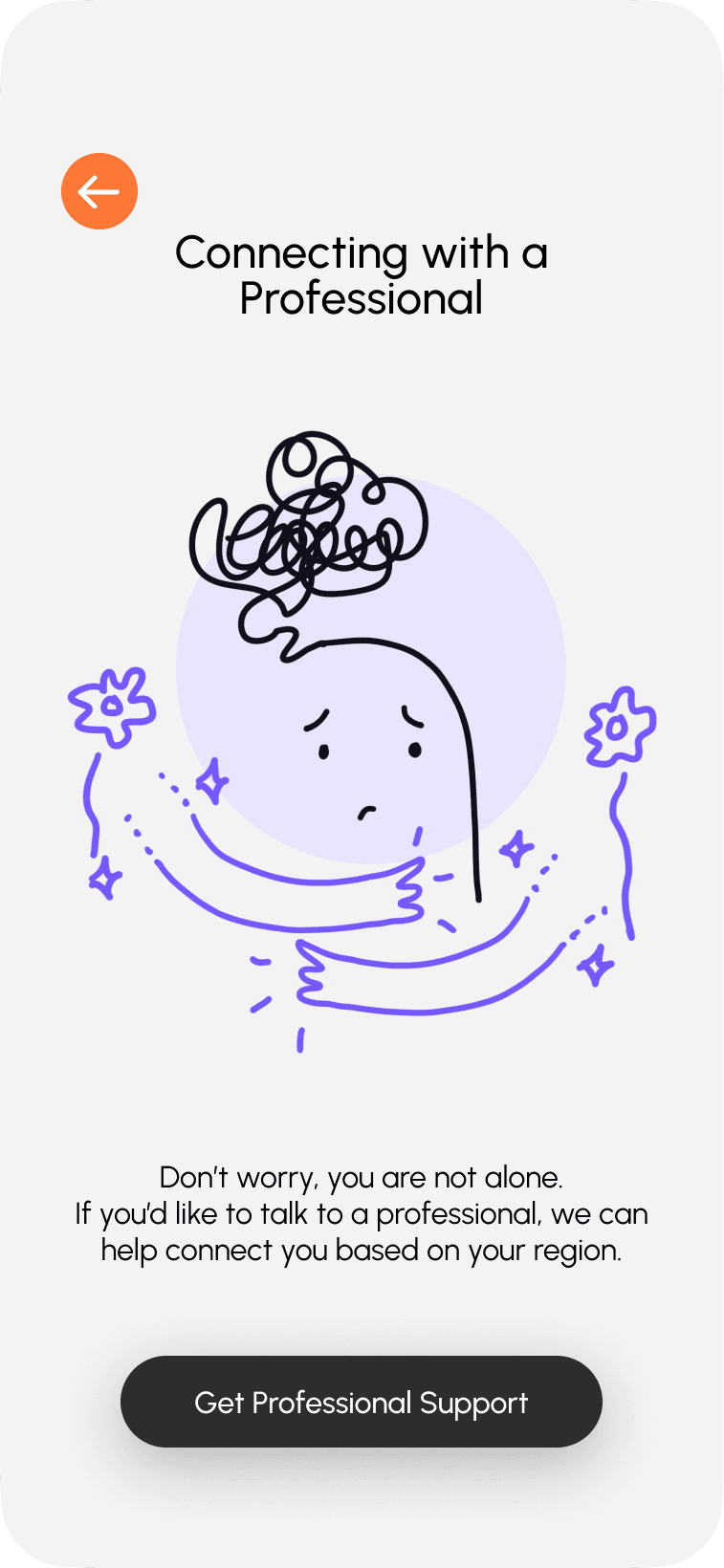
Profile and Settings

The Impact
The research approach used in this study was mentioned in scientific literature
The research and the methodology used received highly positive feedback from supervisors and lecturers at the University, who highlighted its innovative use of AI-generated imagery within participatory design sessions.
The project was later featured in an academic paper exploring the role of AI in research and co-design/participatory practices, recognizing it as a meaningful example of emerging methods. You can explore the publicationin the link below:
Do not believe hype: Critically discussing the role and pedagogical implication of generative AI in Human-Centered and Transdisciplinary Design Education
Conclusion + Lessons Learned
Things I learned and what I’d do differently next time.
This project helped me understand how meaningful digital products can be for real people. I saw how a small interaction or a simple visual can genuinely support someone, but I also learned how easily design choices can unintentionally add friction or even harm if done without care.
I learned to embrace iteration and to stop fearing unfinished ideas. Early versions are meant to be messy, because testing and time shape them into something better.
I also realized how important it is to be mindful of how I ask questions during research. The way I frame something can bring my own perspective into the room, so being aware of my influence is part of doing honest UX work.
Another lesson was accepting when things do not work. Every failed direction taught me something valuable and made the next attempt stronger. On the design side, I became much more aware of how UI elements shape behavior. Even small changes in layout, tone or flow can guide users in a positive way when done with intention.
Overall, this project showed me how thoughtful design can support people in moments that matter, and that responsibility is something I want to carry forward.