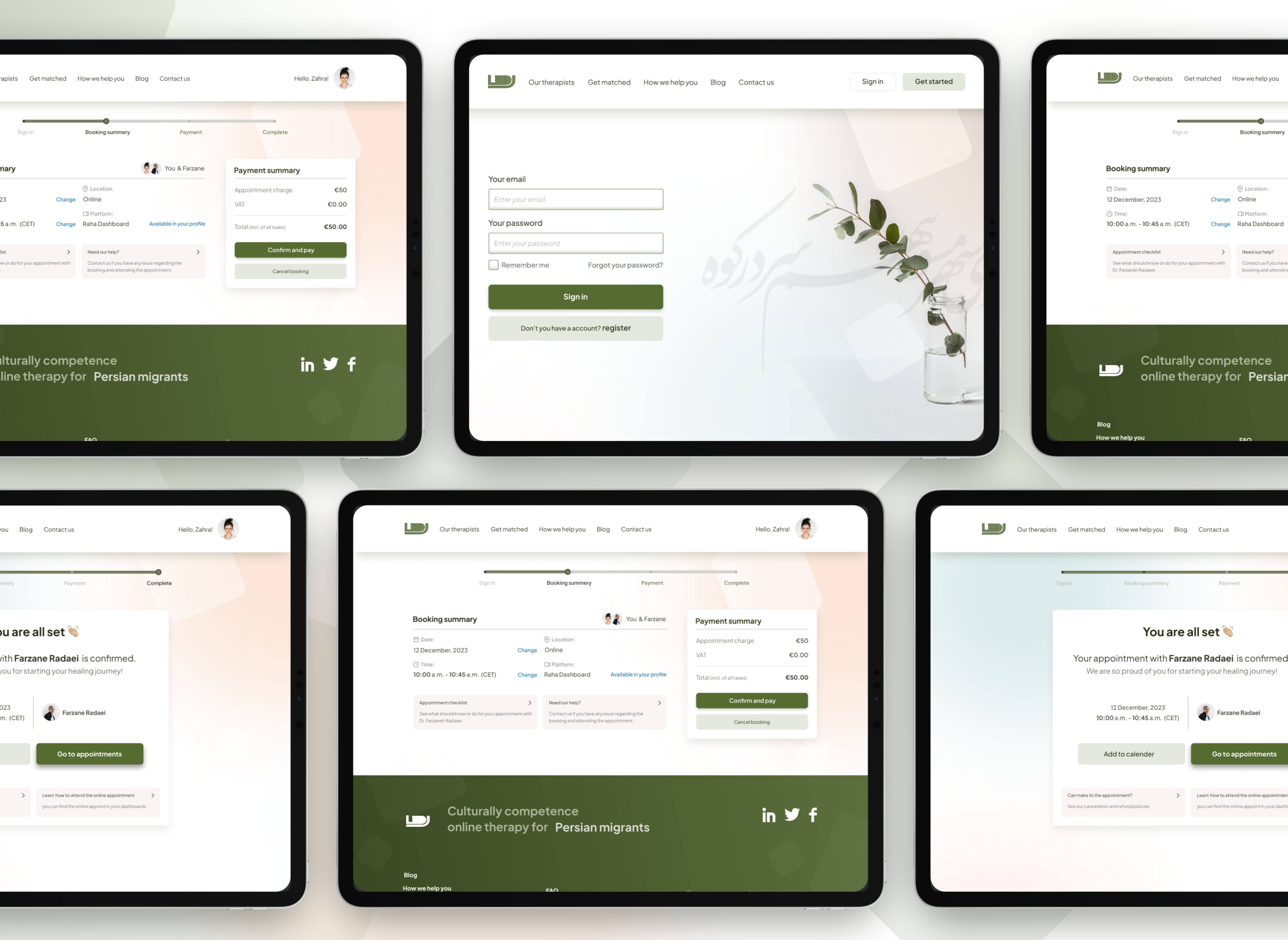
Raha
Online therapy platform for Persian Migrants
My Role
Research, UX Design
UI Design, Prototyping, Testing
Team
1 Design Lead
1 UX Designer (me!)
Timeline
12 Weeks
Tools Used
Figma, Miro
Adobe Suite
Sector
B2C
Health
Process
UX Research
Contextual research
User survey
User interview
Competitive analysis
Define
Information Architecture
User flow
Wireframing
Lo-fi Prototyping
Concept Testing
UI Design
Style guide
Hi-fi Prototyping
Design System
Accessibility Evaluation
Tests
Usability testing
A/B testing
Secondary Research
The numbers behind the problem
40%
Increase in chance of depression among migrants compared to non-migrants
*The prevalence and risk factors for anxiety and depression symptoms among migrants, 2023
1 out of 3
Asylum seekers and refugees experience high rates of depression, anxiety, and post-traumatic stress disorders (PTSD)
*American Psychological Association
970 million
People globally were living with a mental disorder; anxiety & depression the most common.
*WHO 2019
User Survey
We surveyed 32 Persian migrants living in Europe to understand what factors they prioritized when looking for a therapist. Most preferred a Persian-speaking therapist who shared a similar cultural background.

How important are the following factors when choosing a therapist?
(from not important to very important)
Rapport and connection
Qualifications and credentials
Cost
Experience
The reviews
Gender of the therapist
It was interesting that the majority of the respondents find the bond and connecting with the therapist very important!
User Interviews
12 semi-structured, in-depth interviews were conducted
We conducted 12 in-depth semi-structured interviews with Persian migrants living in Europe. The objective was to explore their mental health help-seeking behaviors, understand their needs and pain points, and learn why they chose a specific therapist.

Insights from user research
Personal
Impressions
Users like to know about therapist’s appearance, vibe, energy, way of talking ,body language and posture.
Professional
Qualifications
Users like to know about therapist’s formal credentials and expertise, educational background, training, and relevant experience.
Session Duration
& Cost
Users seek information on session duration and cost to plan schedules and budget effectively.
Competitive Analysis
2 Popular online therapy platforms targeting Persians were analysed
We analyzed 2 popular online therapy websites designed for Persian migrants, focusing on the first-session therapist booking experience. One of the designers in this research was a client on one of the websites for 5 months, which helped significantly in understanding the platform more deeply. For the other, we conducted a comprehensive audit.

Strengths
Both websites provide accessible online therapy. On both websites, users can pay with international cards.
Gaps
Both websites lack sufficient therapist information, only providing CVs. Simiaroom matches users to therapists based solely on expertise, removing any personal choice.
Takeaways from the Research
People think of picking a therapist like choosing a friend who's also a professional. Besides their expertise and qualifications, people find a therapist's personal traits like their vibe, energy, body language, and communication style just as important.
Information Architecture
Using the research insights, we created and defined the information architecture of the platform.

User Flow
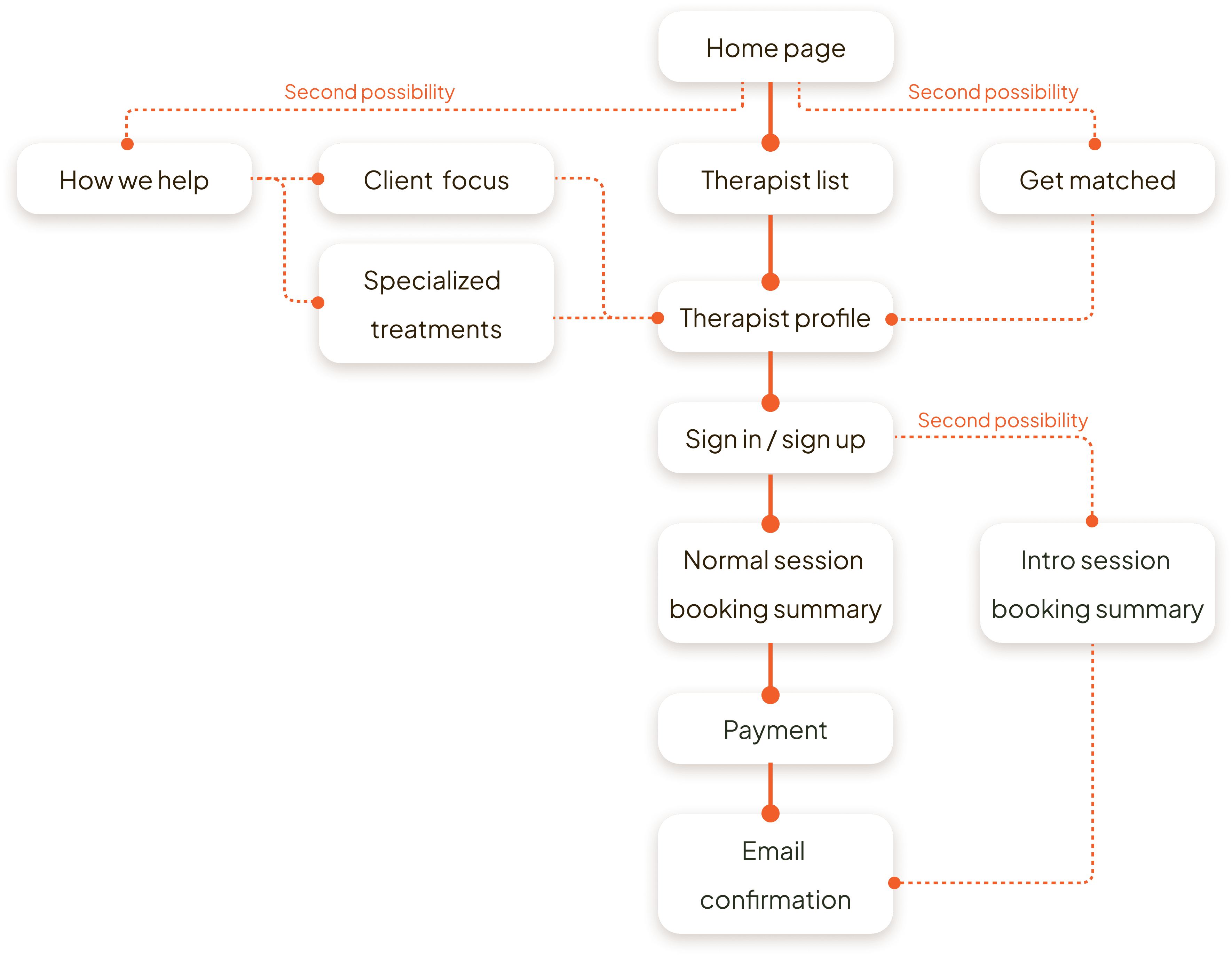
We designed a user flow with three main pathways. The primary one follows users browsing and booking a therapist. The other two, matching and the "How We Help" section, are beyond this project's scope.
Rounds and Rounds and Rounds and Rounds of Wireframing and Iterating

Usability Testing
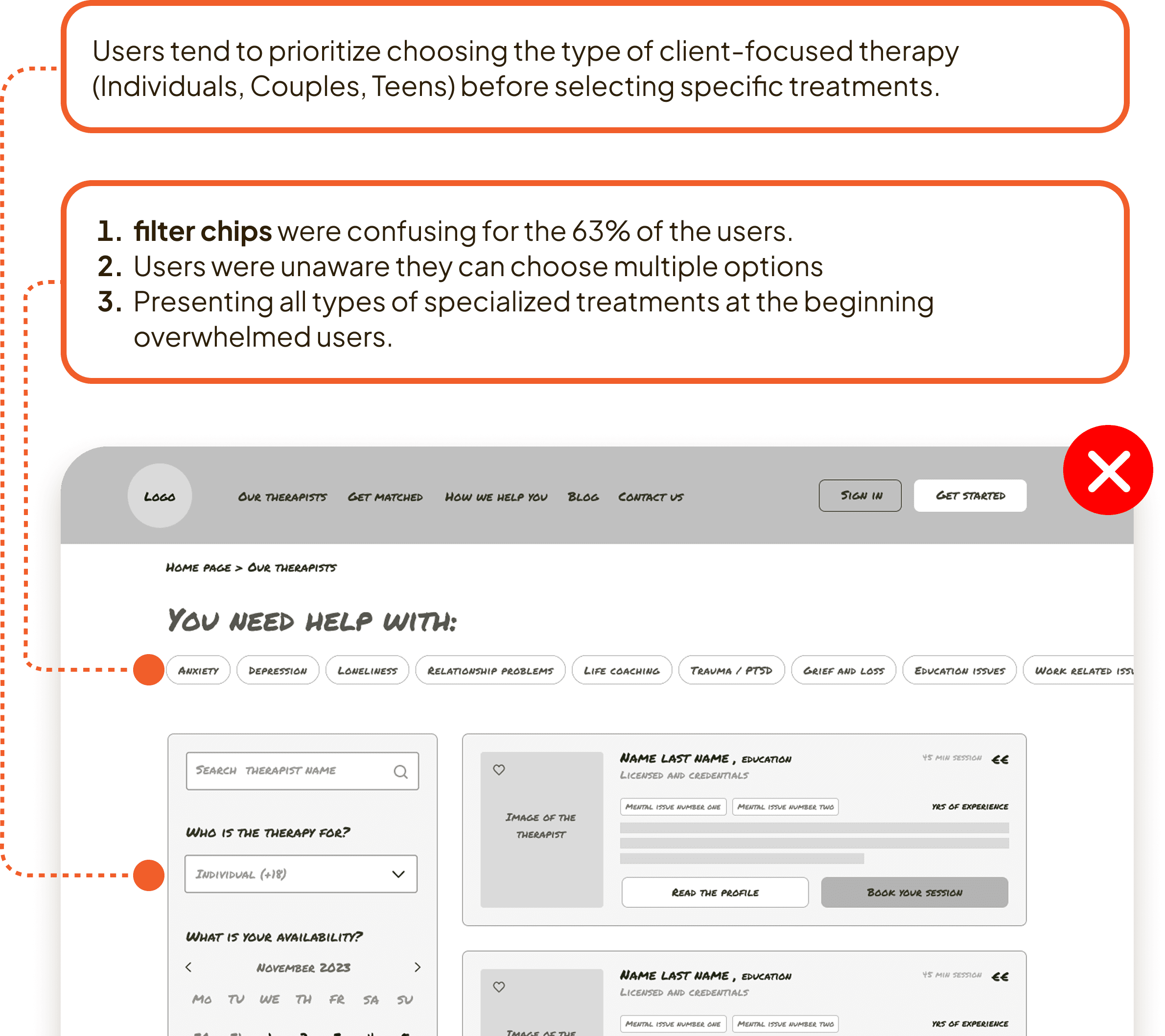
We created two mid-fidelity prototypes for the two main pages of the website (therapist list and therapist profile) to test design concepts with 3 users. The test metric was task completion (finding the right therapist and treatment). We then asked them questions about their experience.

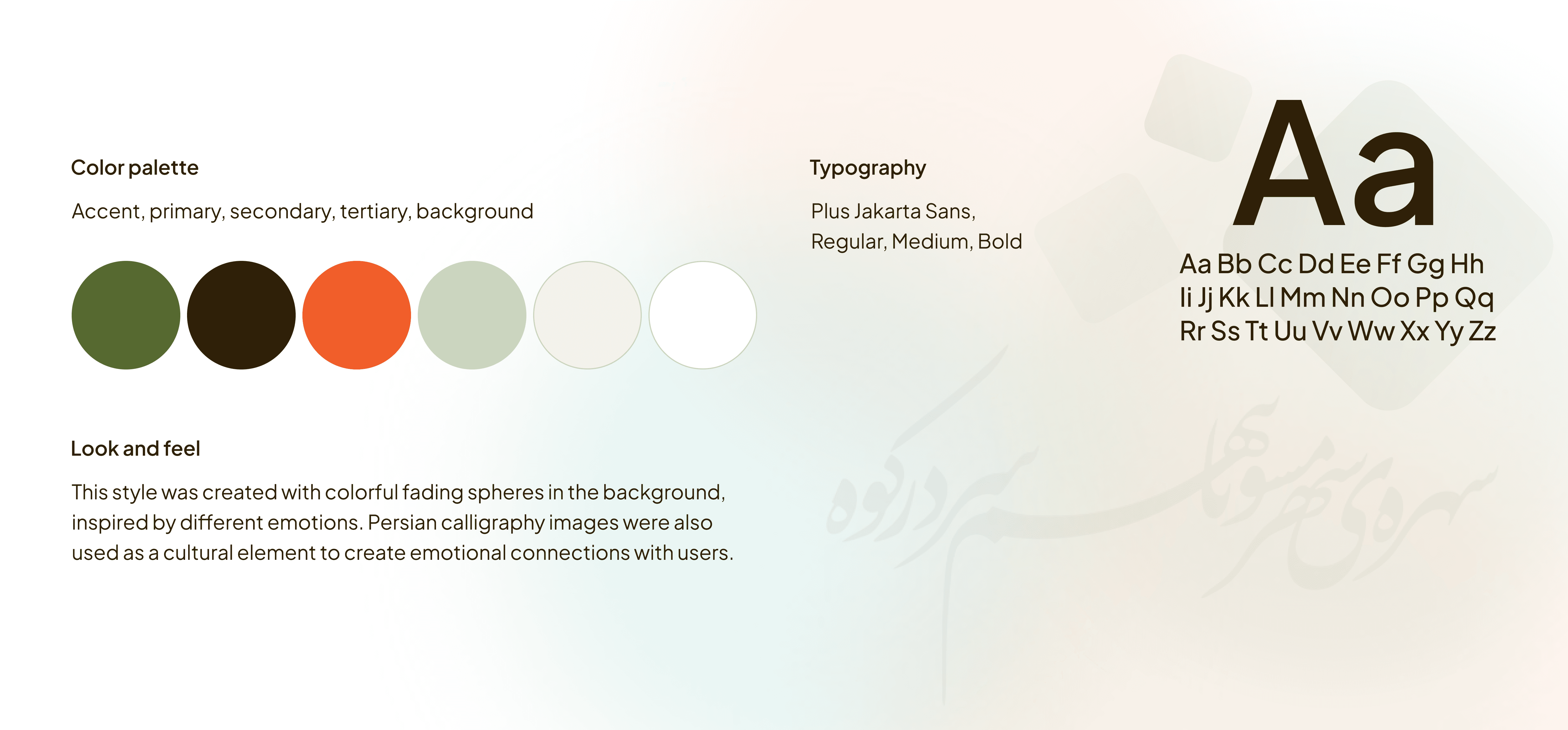
Style Guide
Once the user flow and wireframes were completed, we started designing the main screens. we started by defining typeface and the color pallete and the whole look and feel of the website.
Landing Page
After finalizing the style guide, we created attractive UIs for both mobile and desktop, keeping accessibility in mind.


Scroll
& Explore!
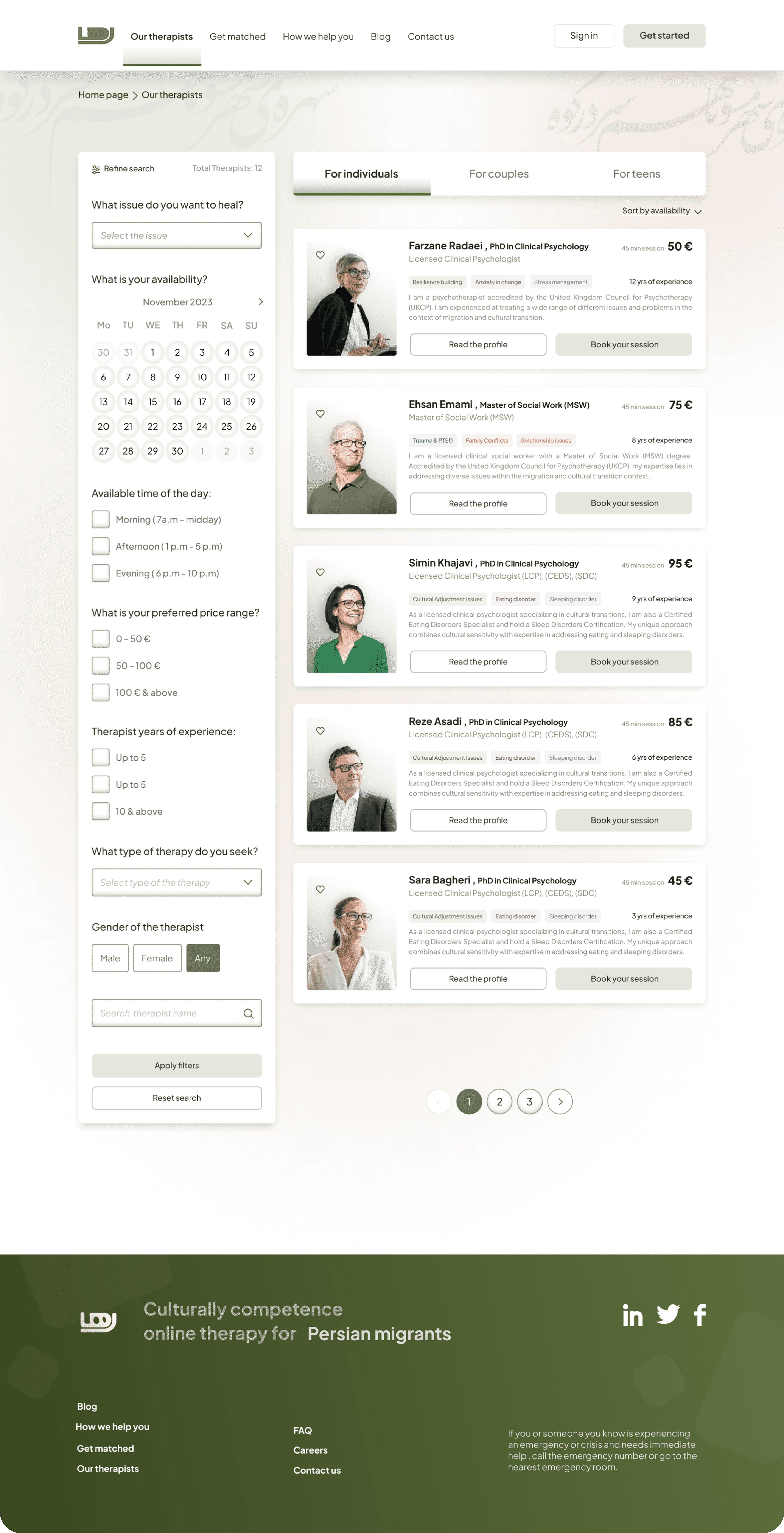
Therapist Search
Search filters were designed based on user research, covering criteria like issue type, availability, gender, and therapy type. The goal is to give users enough information to choose their therapist independently. Matching is also possible, but falls outside the project scope.

Therapist Profile
Here, users can learn more about the therapist, both from how they come across personally and their professional qualifications. There are videos where the therapist talks about what they're good at. In these videos, users can see how the therapist acts and decide if they're someone who can help them.


Complex Component Breakdown
The therapist card was organized using hierarchy strips, grouping essential details like credentials, session price, and title for user convenience. Clear separation emphasizes the divisions and forms logical groups for easier decision-making.

Spacing
An 8pt grid system was used to ensure consistent spacing and a clean design for the card.

Project Summary
The project involved evaluating the market and competitors, conducting user surveys and extensive interviews, and creating wireframes across various ideas. These were connected into prototypes and tested with potential users. Based on feedback, the designs were iterated on, resulting in visually refined UIs and high-fidelity prototypes. A final comprehensive audit was conducted focusing on consistency and color contrast for accessibility.